


My interview with Taras Yatsenko, co-founder and spiritus movens of Tvoe Misto, a media outlet from Lviv, Ukraine, was unexpectedly delayed due to a cyberattack. When we reconvened via Zoom, Taras explained that this kind of attacks happened almost daily in the first weeks of the invasion, but are now relatively rare. Tvoe Misto was founded in 2014 as the city’s independent multimedia hub, comprising a website, online TV and production studio, all of which relies on advertising and grants from international donors while backed by citizens of Lviv who have come together as “Friends of Tvoe Misto”. Cyberattacks were not the only change introduced by the war. Excerpts follow from our conversation.
I remember first reading about Tvoe Misto: what caught my attention were public discussion forums that you were organizing to deal with the needs of citizens of Lviv. I assume you stopped doing these during the war?
We organized such public debates at least two or three times a month, sometimes every week, before the full-scale invasion. Then we stopped, of course, for a few months. As the war started, we had to revise our overall content strategy and, at the same time, realized that we had even more challenges—for example, with IDPs (internally displaced people) coming to Lviv. There was a time when a million people from all parts of Ukraine would pass through Lviv in a very short period. So we had many new topics to cover and many new issues arose, and we decided, okay, we have to continue. And we heard from many people in the community that they need us to be a moderator of these discussions.
In the summer of 2022, we started organizing them again. We had a few public debates about refugees who are living in different countries of Europe and the rest of the world, and about their communication with Ukraine, with Ukrainian authorities, and with people who live here. What are their expectations of coming back? What are their needs?
The first public debates after the start of the war were about things very strongly connected to war: helping veterans, IDPs, and volunteers. But then we also realized that we have many challenges in the city, like economic development and resilience in times of war. We are shifting now, since the community is ready to discuss issues more connected with city development, which was our strategy with public forums from the start.
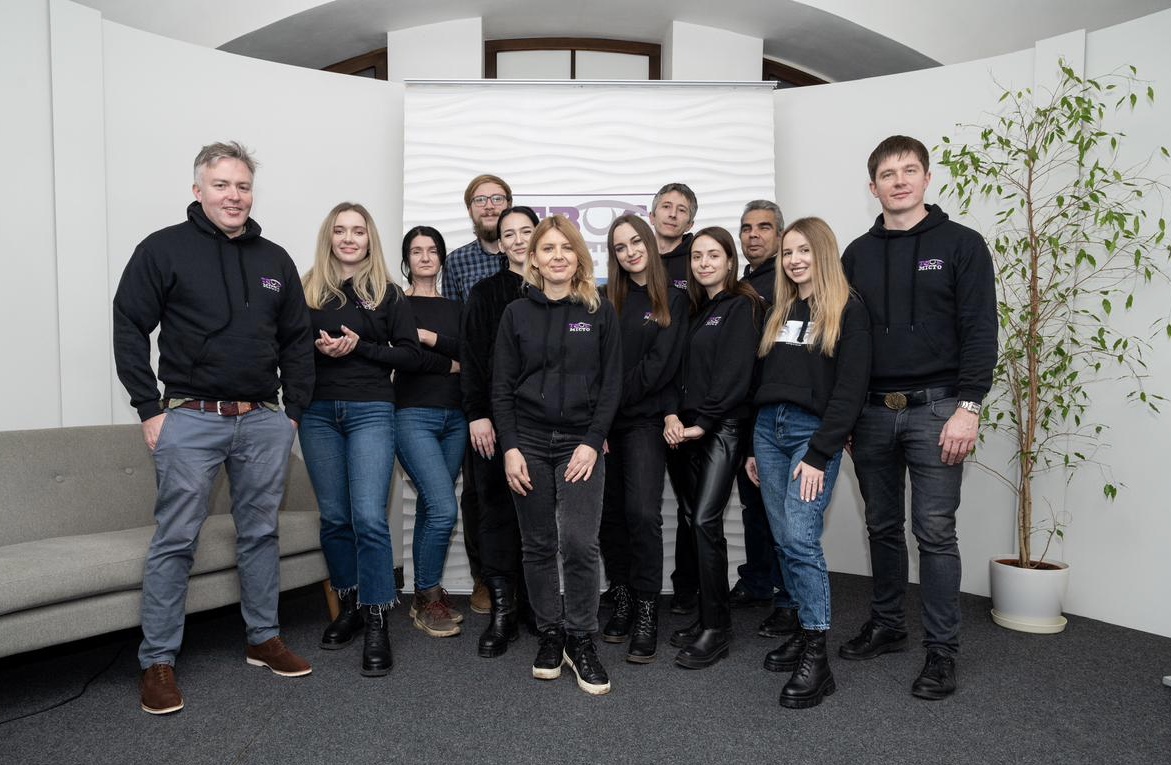
Tvoe Misto moderates these forums and invites speakers including city officials, policymakers, experts, and civil society actors. What is the reaction of citizens of Lviv? Is there any follow-up by policymakers based on these discussions?
Citizens come to us and tell us they have been struggling with some challenge for months or years: “This is such a huge problem for the city and officials do not listen to us. Can you make a public debate about this?” Then we organize it, and it works; it helps us find solutions, because people are open to us. They know that we’re not pro or against anyone, but rather independent. Our team of journalists is monitoring follow-ups on these topics, and if an official says publicly at the forum, “Okay, we will fix this,” then in three months, our journalists will call him/her and ask what changes have been implemented.
Before the war, Tvoe Misto covered life in the city, its culture, rhythm and style, focusing on the needs of residents but also promoting the city to the visitors. How did Tvoe Misto’s newsroom adapt to a “new reality” of operating during wartime? And how did you survive financially?
We continued covering the same topics that we covered before. Still, many topics became even more critical, including everything connected to the military and the defense, both locally and nationally—enrollment in the army, volunteers, IDPs, veterans and their rehabilitation. So, we got five to ten new topics that are extremely important. The scope of work increased significantly, and we had to hire a few more employees to be able to cover it all. Now we are struggling to keep them.
Business advertising gave us about 50, sometimes 60 and even 70% of the operational revenue before the war, and then stopped almost completely. We have “Friends of Tvoe Misto” members, but we didn’t want to ask them for help in the first year of the war. International donors helped us [EJC, Thomson Reuters Foundation, USAID], but only for half a year. Afterward, they shifted their support towards the east and south of Ukraine, although there were almost no people or media there. But they are trying, and we also came back to advertising—not on the same level as before the war, but close enough. We advertise only those brands or businesses that correspond to our values and are interesting to our readers, too. We also launched Tvoe Misto Kyiv with the support of the European Endowment for Democracy in the summer of 2022, and we already have some audience and social media presence there. We started organizing public debates there, also.
Given all the difficulties posed by war, why did you decide to launch a new Kyiv edition?
We have been debating this for a few years. We realized we’d done many things and that we were on top in Lviv, but we also wanted to do something more. I had many conversations with friends—fellow journalists living in Kyiv, who were all focused on national topics and national issues. But when we would go and drink beer together in the evening, they would talk mainly about the problems of the city. And there was no media that would try to approach these issues. Kyiv is a huge city. Kyiv and Lviv are one-third of Ukraine in terms of population, and we saw this could be a challenge for us, but we were ready for it. We had a very good strategy and initial team in place and felt a strong demand from the citizens of Kyiv.
The only thing we were not sure about was the language, because we’re Ukrainian only; we started publishing some content in English a few years ago, but not in Russian, and at that time, Kyiv was—in terms of consuming media content—to a significant degree Russian-reading. But then everything changed with the war, and we realized that people were very open to us. Of course, it was harder because Kyiv had more missile attacks than Lviv, and many people left the city, but initial feedback shows that we made the right decision.
War times pose specific challenges for the country’s media. Not only obvious ones, such as the safety of the journalists reporting from the front lines, but also issues of reporting biases and the ability to present a plurality of viewpoints instead of only one unified narrative. I am asking this because I grew up on the first line of Croatian defense and still vividly remember those “dark times” of our mainstream media. How do Ukrainian media generally cope with these challenges?
The situation is not that bad, but also not that good. I see many threats and dangers to the democratic development of the media landscape in Ukraine. Since the full-scale invasion, the dominant role and biggest chunk of financial resources goes to the state-owned media. And there is also, I don’t know if you have heard about this, a single TV Marathon. They summoned different TV channels belonging to different oligarchs and told them, “Okay, there’s going to be a common TV space united under our umbrella and if you want some space, you can join in.” An argument for doing that was quite reasonable in the early days after the invasion. But all the media experts say it’s nonsense today or even the past year. Before the invasion, we had a kind of plurality in terms of different oligarchs owning different media. They were all biased, but they would fight each other and there would be some kind of a balance. Now it’s all just under the government umbrella.
There are also dangers related to the different things that are happening with journalists in Ukraine recently—for example, security services imposing surveillance, especially on investigative journalists. At the same time, the support of big donors mainly goes to bigger national outlets, while local media are dying across Ukraine. Since we are a very decentralized country, decentralization was one of the most successful reforms of the past decades; having good local media centers and conversations is crucial.
We have no local media except maybe just two or three small ones in Kyiv. I work now as a mentor for the south and east, and I can see that we have almost no media there. Deutsche Welle was doing research last year and they made a list of maybe 48 local media outlets that are, from their perspective, most worth supporting, independent, possible for scaling, etc. And I realized that maybe 40 out of these 48, all together, have a smaller audience in total than the one we have in Lviv and Kyiv. From my perspective, that’s a huge problem, and the main danger for democracy here.